
How to Identify and Subvert Modern Iterations of Historic Stereotypes

If you’ve heard the phrase “there’s nothing new under the sun,” the same applies to stereotypes. As a sensitivity reader, I’ve flagged many stereotypical representations, none of them brand new or unique, not even in a far-future set sci-fi or high fantasy with made-up species and non-human creatures. Instead, they’re all derivatives of stereotypes that have existed in the media for centuries.
Generally, stereotypes are bad in stories because they are flat, one-note characters that become ad-hoc representations of an entire identity group, rooted in historical oppression. They also come across to a reader as laziness on the part of the author, who did not bother to research and write honest, authentic, nuanced characters.
No one is innately an expert on stereotypes, either within their own identity or as an outsider. Proximity and membership do help, but they don’t automatically make you cognizant of the harmful ways people like you are depicted in the media.
Let’s learn how to identify and subvert modern iterations of stereotypes together.
We’ll use the “mammy” stereotype throughout this blog as an example. If you’re unfamiliar, mammy is the enslaved Black woman who is traditionally depicted as fat, middle-aged, and motherly but asexual. She sometimes has children, but doesn’t spend time with them because she is happily devoted to taking care of her enslavers. Her happiness is evident in her wide smile, which is often accompanied by a song and an easy laugh. She’s downright jolly. Mammy sees her worth and takes pride in her ability to cook, clean, and run a White household. Its most famous depiction is the character Mammy (we never learn her name) in Gone With the Wind and Aibileen in The Help.
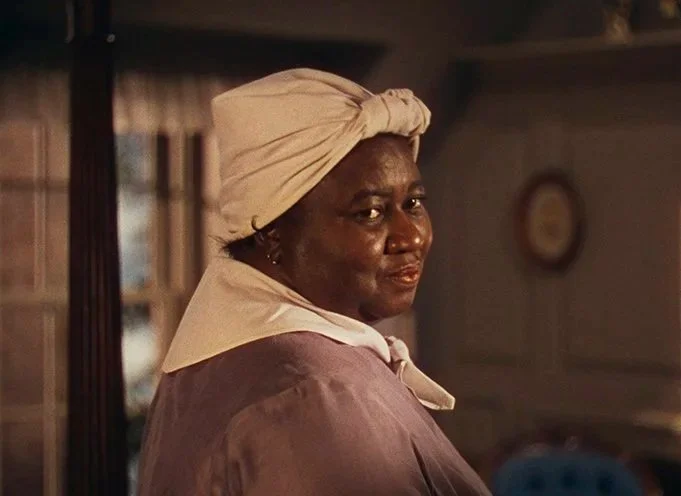
Hattie McDaniels playing “Mammy” in the Gone with the Wind
1. Research the history of stereotypes of that identity in the media
It’s important to research the particular stereotypes of the identity group you’re writing about.
The mammy stereotype goes back to antebellum times and was created and perpetuated to spin the tale that there were “happy slaves.” Those who enjoyed their work and took pride in their role. This, of course, served to minimize the harm of enslavement and also perpetuated the myth that Black people did not want freedom.
This post details some documentaries about historical depictions of different races in the media, which I found helpful when doing broad research.
2. Familiarize yourself with the attributes and traits of that stereotype
Find the bad examples (and the “good” ones) as part of that research. Find out what makes them good and bad. List those attributes. Literally, make a list.
Mammy: fat, happy, woman, asexual, good cook, good housekeeper, fiercely loyal to her white enslavers, often at the detriment of other enslaved people.
3. Look for synonyms and similarities of those attributes
The setting and the time period can change, but the core attributes and impact are constant.
For example, a chubby Black woman restaurant owner who is selfless to a fault. Or a fierce public defender who doesn’t have time to take care of her own needs because she is giving it all to the person she’s defending.
Both of these are Black women whose defining feature is their generosity in their time, resources, and body, at the expense of their own happiness or peace.
4. Consider the character’s appearance, behavior, and purpose in the story.
Stereotypes aren’t created in a vacuum. They exist within the context of the story and in relationship to the other characters. I’m not saying don't write kind Black women who like to cook; instead, consider their characterization and arc. If your character does not subvert the attributes of the historical stereotypes you’ve researched, they are likely perpetuating them in a harmful way.
If your Black restaurant owner doesn't have hobbies that fuel her, or your public defender doesn’t take care of her health because she’s too busy helping others, you may have written a modern-day mammy.
What does subversion look like:
Now that you’re familiar with the attributes of the stereotypes, you can write their opposites, complicate them and provide nuance. Here are some tips that can help.
Having multiple characters with the same identities but different attributes.
Giving characters rich backstories creates multidimensional characters. What can you tell us about who she is that disrupts the stereotypes?
Give them voice, agency, and complexity to push back against objectification. Mammy would never do things for herself or criticise the recipient of her generosity. How would you give this character more complexity and agency to be selfish?
Let them have realistic reactions - what does the character think and feel about what is going on? Mammy never complains or gets tired. Give the reader scenes where they can feel the impact of her choices. What does your character do with her body when she’s exhausted from helping people all day?
Explore varied emotions and behaviors. If mammy is always happy, what other emotions can you give this character to create nuance? Does Mammy have a quirk, or is there a situation when a different emotion is the primary feeling? No one is happy all the time, and neither should your character.
Stock characters are okay if the trope isn’t dependent on a facet of marginalized identity like race, physical ability, gender, sexuality, language, etc.
Stock characters are a useful and effective narrative shortcut. Books would be too long if we had to do a deep backstory on every character. We all know the kid with high waters and thick glasses is a nerd. Having a stock character isn’t automatically bad. However, it’s important to research stereotypes for different identities so you aren’t perpetuating ones that are directly related to marginalized identities.
For your particular character and story, a sensitivity reader can give specific feedback on the characters in your story and help you avoid writing stereotypes.