
You, Me & Tuscany: Second Chances and "Good” Representation
Universal Pictures
If you love romantic comedies, You, Me & Tuscany will feel instantly recognizable. It winks at its audience as it liberally plays on classic tropes, from “fake relationship” to “sun-soaked getaway” and “unexpected love triangle.” Yet, despite any predictability in that, the film delivers such joy and charm, and it does so with two Black leads.
Plot: Lies, Villas, and Second Chances
At the center of the story is Anna, a struggling “professional house sitter” and formerly aspiring chef, drifting through life in the United States after a major personal loss. A chance encounter with an Italian stranger leads her to squat in his empty villa in Tuscany, where a small lie spirals into a full-blown romantic entanglement.
Things quickly get complicated when she meets Michael, the Italian stranger’s charming cousin, who becomes her emotional counterpart. What begins as escapism deepens and evolves into a story about identity, belonging, and choosing authenticity over illusion.
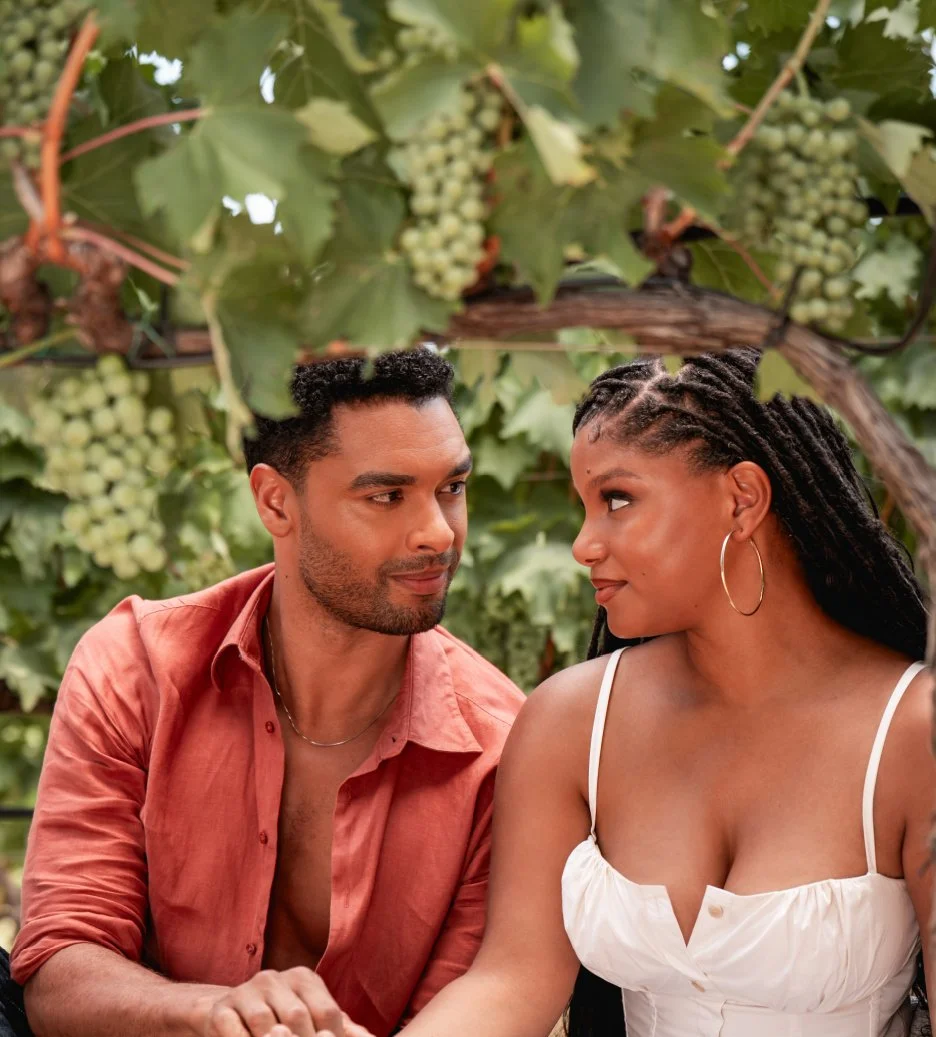
Halle Bailey brings warmth and vulnerability to Anna, portraying a character who flies by the seat of her pants, yet feels both lost and resilient. As for Regé-Jean Page, he brings exactly what many of us want—effortless charisma, a bit of brooding, and just enough humor. To top it off, in the vineyard, he makes feeling for the right soil through their fingers (for the sake of growing the right grapes, of course), one of the most intimate and memorable scenes in the film.
Beneath its glossy surface, You, Me & Tuscany touches on a few grounded ideas:
Rebuilding and reclaiming your life after loss
Rediscovering passion and purpose
Experiencing the difference between pretending and belonging
NOTE: It is important to acknowledge that the depiction of Italian culture has sparked debate in the real world over stereotypical representations. So, let’s keep that in mind.
“Good” Representation?
The film stands out for presenting Black leads in a romantic European setting. The story is not about these characters being Black. But it doesn’t ignore race.
During their meet-cute (or meet-frustration), Anna knowingly starts to say they have something in common as “the only…” to which Michael finishes by saying, “English speakers in the town.” But both they and viewers know what Anna really meant.
When the sprinklers in the fields of Michael’s absolutely gorgeous Tuscan vineyard, Michael not only uses his jacket to protect her hair, but he also reassures her that her edges are fine. She is relieved because “You know there’s no place here for me to get my hair done.”
Anna
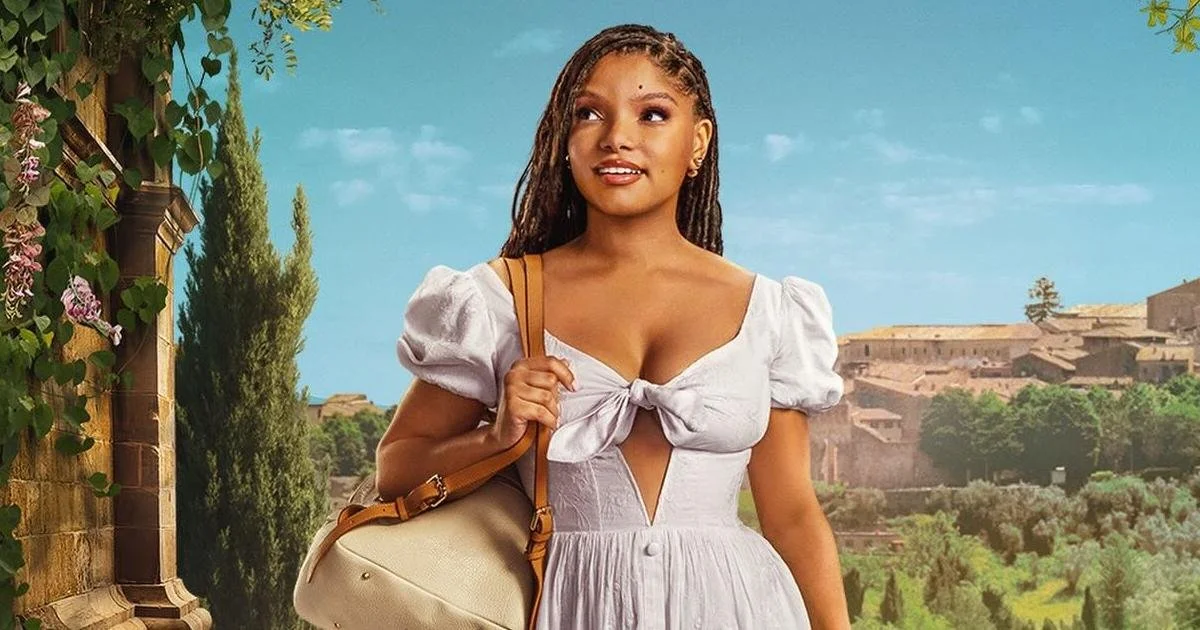
It becomes clear very early on that Anna was not written to be a flawless heroine. She crosses clear ethical lines, from lying about her identity to seizing opportunities that aren’t entirely hers and—SPOILER—wearing the clothes (even the underwear) of people who trusted her to professionally house sit.
Many films and books would “punish” a Black woman character for being crass and opportunistic, and forget about making her the lead or giving her a happy ending. Too often, if a Black woman is not 100 percent perfect, she can expect crumbs at best and trauma at worst. But the film explicitly frames Anna’s behavior as flaws to grow from. Her missteps of dishonesty and blurred boundaries become the engine of the story, creating the central conflict and feeding into her character arc (towards becoming accountable).
Anna is allowed to be imperfectly human and still deserving of gentle love in the way that too many Black women characters are denied. Her growth and self-definition aren’t reduced to the one-note Strong Black Woman trope, the comic relief, or a symbol of struggle. Instead, she is romantic, vulnerable, ambitious, messy, and joyful, all at once.
Her presence in a dreamy, European setting also matters. Having a Black woman at the forefront of an escapist Tuscan romance can expand the visual and narrative space Black femininity is considered to exist in. And, no, not solely for love. Anna is driven and skilled, navigating questions of confidence, identity, and professional purpose alongside the enticing romance. That balance gives the stakes more depth and spice.
Whether Anna is “good” representation depends on perspective. It is important to separate likability from representation, though. Allowing a Black female lead to be imperfect—even selfish or inconsistent—can itself be progress, pushing back against the expectation of constant excellence for the fragility of the audience.
Michael
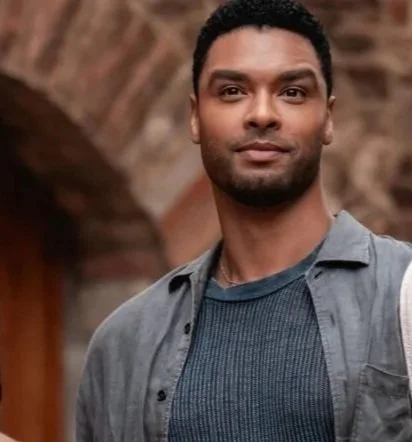
Michael, on the other hand, is the inverse. He’s firmly “inside,” anchored within his family, culture, and responsibilities. Yet on a personal level, he carries an emotional assumption that love may not fully choose him. This may be informed by being adopted into the family after a tragic loss. There’s a subtle belief that he is the dependable one, the steady presence in others’ stories, but not necessarily the person who “gets the love interest” or becomes the center of someone else’s future. He’s never entirely convinced he will ever be fully chosen.
That unspoken fear shapes the way he moves through relationships, even when he doesn’t articulate it directly. Michael is equally as vulnerable as Anna, and his need for reassurance is surprisingly refreshing because it is so rarely seen in straight Black male romantic leads.
The Best Friend
Anna’s pregnant best friend, Claire, subverts the Sassy Black Best Friend trope by challenging Anna, calling out her choices, and modeling a more stable, self-assured path. On the surface, yes, Claire might seem like she is only there for comic relief or one-liners, but throughout the film, she gives her own grounded, relatable, and respectable perspective as well as emotional stakes. [NOTE: The only major thing that seems to be missing with Claire is establishing her own love life.]
Final Verdict: Absolutely Delightful
You, Me & Tuscany is a light, romantic escape filled with attractive leads, beautiful scenery, and a feel-good ending you can see coming from miles away but still enjoy getting there.
Isabelle Felix is a psychology research and therapy assistant turned editor, beta/sensitivity reader, and author coach. The passion to reach out and understand another person’s perspective has led her to work with Big Five Publishers, NY Times and USA Today best sellers, Big Apple Film Festival screenwriting finalists, International Leaders of Scenario Planning consulting firms, and writers who are still getting used to putting themselves and their stories out there. So, whichever stage the writer is at, Isabelle is always thrilled to meet them there.